
 On my previous article 7 Foods that you must include in your diet, I talked briefly about the importance of seeds in your diet.
Seeds are extremely beneficial to your health and each seed has its own reason for being a health asset. Today you will find descriptions and benefits of six seeds that I most commonly use. So what is a seed? A seed contains the potential for an entire plant in a small capsule. The entire plant and its nutrients are packed into this tiny little shell that you will bring into your body. I like to think of seeds as a super concentrated dose of nutrients ready to go!
With so many food trends in our society, it is sometimes overwhelming to introduce new foods into your diet. Regularly, I study new products and foods to continue my own education and experiment with them on myself and family. Often, I’m amazed at a great find that can be introduced into our family’s regular menu, but other times I make the decision that a certain product is just not for us.
One of the most important concepts of Ayurveda is that one size does NOT fit all. A certain food item may not be right for you, for your mind/body type, while it may be perfect for someone else in your family. As I recommend these seeds look at their overall benefits and see if they are right for you. Consider if they will complement something that may be lacking in your diet. The six seeds listed, are the ones that I have on hand most of the time and the ones I most commonly use in my recipes. For anyone looking to introduce seeds into your diet, my recommendation is to try two or three at a time, and then make a decision on which ones work best for you.
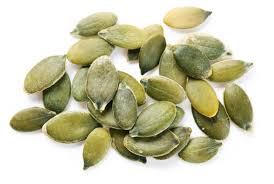
Pumpkin seeds are available year round, but right now they are even more accessible during the pumpkin season. What do you do with the left over seeds from the pumpkin puree you used to make my Pumpkin Muffins? You roast them and eat them as a great snack, or add them as toppings to cereal, salads, soups, baked goods, or your favorite meal. Pumpkin seeds add a unique crunch to soups! Let’s take a look at some of the benefits these great little seeds contain.
- Mineral Support – high quantities of phosphorus, magnesium, manganese, copper, iron and zinc. Zinc is especially related to men’s health, as is linked to prostrate health.
- Antioxidant – a wide variety of different forms of the Vitamin E and phytonurtrients.
- Antibacterial – strong presence of the phytonutrient Lignan.
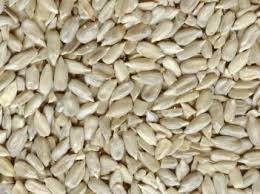
Sunflower seeds are available all year round in most food markets. They are a great snack to have handy for a boost of healthy fats, vitamins, and minerals. For those that enjoy a hearty and healthy snack mix, sunflower seeds work well in almost any combination of nuts and dried fruits. As we begin the autumn season, these nutty seeds will definitely be a topping of my favorite fall soups such as butternut squash and sweet potato soups! Let’s see what are some of it’s health benefits.
- Cholesterol health – high in polyunsaturated fats (50% fatty acids) and good quantity of monounsaturated fats. These fatty acids help to lower LDL (bad cholesterol) and increase HDL (good cholesterol) .
- Protein – 100 g of these seeds contain about 21 g of protein.
- Brain health- vitamin B complex and good source of magnesium.
- Cancer prevention – the presence of the mineral selenium has been shown to aid in the repair of cell’s DNA.
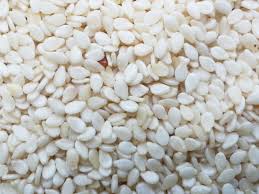
Sesame seeds are those tiny seeds that we sometimes find stuck in our hamburger buns! Asian in heritage, they are most commonly found in a variety of Chinese, Korean, and Japanese dishes as well as the main ingredient in Tahini paste. I often add these tiny little seeds in a variety of my baking products. Tahini paste is a great alternative to the usual peanut butter on toast. Tahini is a also that special ingredient that makes your homemade hummus taste more special. Of course. you can always add sesame seeds to your salads, soups, and other favorite dishes. When examining the benefits of sesame seeds, there are three very important minerals that are present in large quantities in these tiny little seeds.
- Copper – a great ally to bone health. It has been shown to help relieve pain and swelling in rheumatoid arthritis. Copper also has anti inflammatory qualities.
- Calcium – another great ally to bone health, helping you to maintain strong bones and teeth. Calcium has also been shown to aid in lowering the symptoms of PMS in women.
- Magnesium – this mineral has been shown to help in lowering blood pressure, respiratory health (especially asthma), and with regulating blood sugar levels (diabetes).
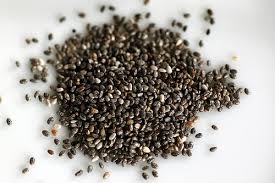
Chia seeds are tiny little seeds that originated from South America, The translation of the word “Chia” from the ancient Mayan civilization is “Strength”. Chia seeds were very important source of energy and strength to ancient Mayan and Aztec warriors. These seeds have existed for thousands of years, but only very recently have become more popular. There are many ways to add these seeds into your diet, but I will share a few of my favorite with you. I enjoy adding 2 tablespoons of chia seeds to coconut water and letting it form a gel. I then take the gel as an energy boost before a run! I often use chia as an egg replacer on my baking recipes. Chia seed is also a must in my bowl of porridge! One of my daily breakfast options! There are many benefits to these seeds, but here are a few of my favorite reasons to enjoy Chia seeds.
- Omega 3 fatty acids (ALA)- helps lower cholesterol, reduce inflammation in the body, and helps boost brain health.
- Protein – great source of protein, especially for those in a plant based diet. There are approximately 4.4 grams of protein (10% of recommended daily intake in an average person) in only 28 grams of seeds.
- Fiber – a key ingredient to digestive health. Chia seeds have approximately 11 grams of fiber in 28 grams of Chia seeds. Chia seeds absorb 10-12 times their weight in water, transforming themselves as a gel like substance as it travels down your digestive system. This gel like substance helps with the elimination of toxins as well as giving you a feeling of fullness (curbing your appetite).
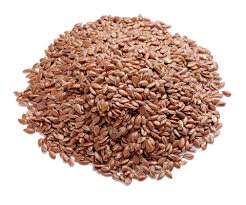
Flax seeds in my opinion are the most popular of the seeds mentioned here thus far. It has made it’s way to many food items and you can now find a variety of products claiming to be “Flax”. In my experience, I have grown to prefer the consumption of ground Flax versus the whole seed itself. The whole Flax often times is not completely digested, so it is eliminated by your body undigested and you end up not getting all the benefits of the seed. Ground Flax, however is easier on the digestion, making the absorption of its nutrients, easier on the body. You may ground whole Flax seeds in a coffee grinder or buy it already whole (Costco has ground Flax in bulk for a great price). Flax seeds are great for smoothies, used in my Everyday Pancakes, and as an egg substitute to many of my baking recipes. Flax can be used as an alternative thickening agent as well. Now to the wonderful benefits!
- Fiber – Flax seeds have both soluble and insoluble fibers. Both types are very important to the digestive health helping with constipation (elimination), lowering blood sugar levels, and lowering cholesterol.
- Phytochemicals – high quantity of lignans, which have been linked to inhibition of cancer tumor growth.
- Omega 3 fatty acids (ALA) – healthy fat that is very important for cardiorvascular health. It also helps to reduce inflammation thus boosting the immune system.
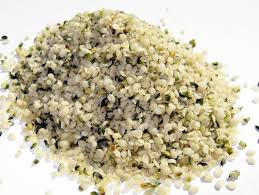
Hemp seeds come from the plant Cannabis Sativa L. Hemp is commonly confused with marijuana , as they belong to the same plant family, however the two are quite different. There is less than 1% of THC, the brain altering substance in marijuana, in hemp seeds. Hemp seeds are mostly cultivated in Canada. Hemp seeds have been compared to Chia and Flax seeds on its benefits, but I like to view hemp not as an alternative, but as a complement. Hemp seeds don’t have the thickening effect on foods that both Chia and Flax have, making it it a lot easier to add to most foods. In addition to the other seeds mentioned, I like to add hemp seeds to my smoothies as a natural boost of proteins. Hemp also find their way to the snack bars that I make to my family and clients. Hemp can be sprinkled on most foods without altering their taste, but still providing you with the benefits. So what are these benefits?
- Amino Acids – there are a variety of 20 different amino acids in hemp seeds, with 9 of the 20 being essential amino acids (EAAS) that are not produced by the body.
- Protein – hemp seeds have a very high amount of protein, the simple protein found in hemp seeds have been known to help boost immunity and fend off toxins.
- Perfect 3:1 ratio of omega 6-3 – great for cardiovascular health. Hemp seeds is the richest source of known polyunsaturated fatty acids.
This article was inspired by those that were looking for a deeper explanation on the benefits of seeds. I hope that after reading this article you might give a few of these seeds a try and incorporate them into your diet. Use this simple guide as a reference to help you to better understand the importance, benefits, and uses of these seeds. Not all seeds are for everyone. See which ones would be beneficial to you. Flax has many benefits, but if you are someone who suffers from IBS, you better avoid it! Being aware of the signals your body gives you is the best practice!
If you are interested in having a nutritional consultation with me feel free to email me at armenia@blissbalancehealth.com
Also check out my webpage to see what other services we offer http://www.blissbalancehealth.com
T
 Bliss Balance Health
Fantastic article! Super informative, thank you!!
Thank you!!!
Pingback: Move over chicken salad, chickpea curry is here! | Blissbalancehealth's Blog